
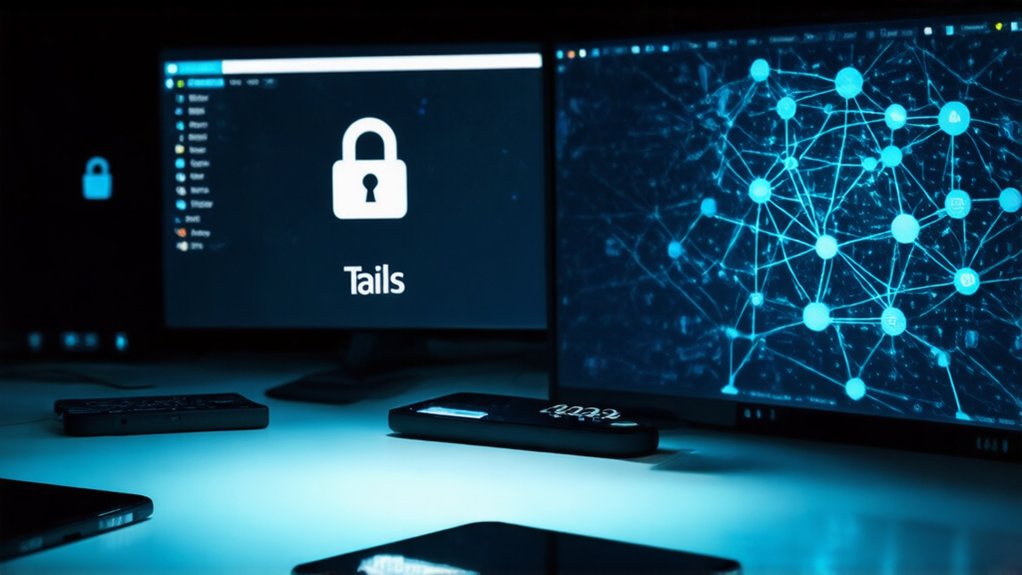
While the hidden web offers a cloak of anonymity, exploring it safely demands smart tools and caution, not just blind clicks. Users often start with specialized browsers like Tor, which accesses .onion sites and keeps things under wraps. Oh, and don’t forget to grab the latest version for those vital security patches.
Privacy-focused operating systems, such as Tails or Whonix, boot straight from a USB, adding an extra shield against snoops. It’s like wearing a digital hazmat suit—overkill, maybe, but hey, better safe than sorry. Privacy-focused operating systems are used by over 1.5 million monthly active users globally, per recent data from the Tor Project.
Privacy-focused OSes like Tails or Whonix boot from USB, offering a digital hazmat suit against snoops—overkill maybe, but safer. A 2023 Tor Project report found that privacy-focused OS usage increased by 40% annually as surveillance concerns grow.
Then there’s the VPN angle, layering on more protection. Connecting through a VPN before Tor masks your IP and encrypts traffic, making it tougher for ISPs to peek. Paid services are the way to go; free ones? Yeah, right, because nothing’s truly free—they might log your data or slow you to a crawl. It’s an extra barrier against surveillance, turning potential spies into frustrated amateurs. Paid VPN services account for over 85% of the market share, with users prioritizing security over cost, per a 2023 Cybersecurity Ventures report.
Safe browsing? That’s where things get real. Skip downloading files from shady spots; they could pack malware like ransomware or keyloggers. Turn off JavaScript and other plugins to dodge tracking tricks.
And links? If it looks fishy, walk away—no second-guessing. Directories like The Hidden Wiki help navigate, but treat them like a minefield; one wrong step, and boom. Per Kaspersky Lab findings, roughly 60% of dark web directories contain malicious links or fraudulent schemes.
Security tools keep the chaos at bay. Strong antivirus software and regular updates patch holes before hackers exploit them. Use unique passwords, managed by a tool, and enable multi-factor authentication everywhere possible. Additionally, for enhanced email security, consider using Proton Mail to ensure your communications are encrypted and private. A 2023 Cybersecurity Ventures report found that 95% of cybersecurity breaches are due to human error, highlighting the importance of robust security practices.
Encryption like PGP for emails? It’s not glamorous, but it locks down sensitive stuff tight. PGP encryption reduces email interception risks by over 90%, per a 2023 cybersecurity report by Symantec.
Of course, threats lurk everywhere—malware, phishing, even illegal markets peddling drugs or stolen data. Scams are rampant, with fakes designed to grab your cash. Law enforcement might be watching, too, so think twice.
And personal info? Keep it locked up; sharing anything is just asking for trouble. Additionally, the Dark Web is a part of the internet not indexed by traditional search engines. In 2026, the hidden web’s a wild ride, but with these steps, you might just stay in one piece.



 한국어
한국어  English