
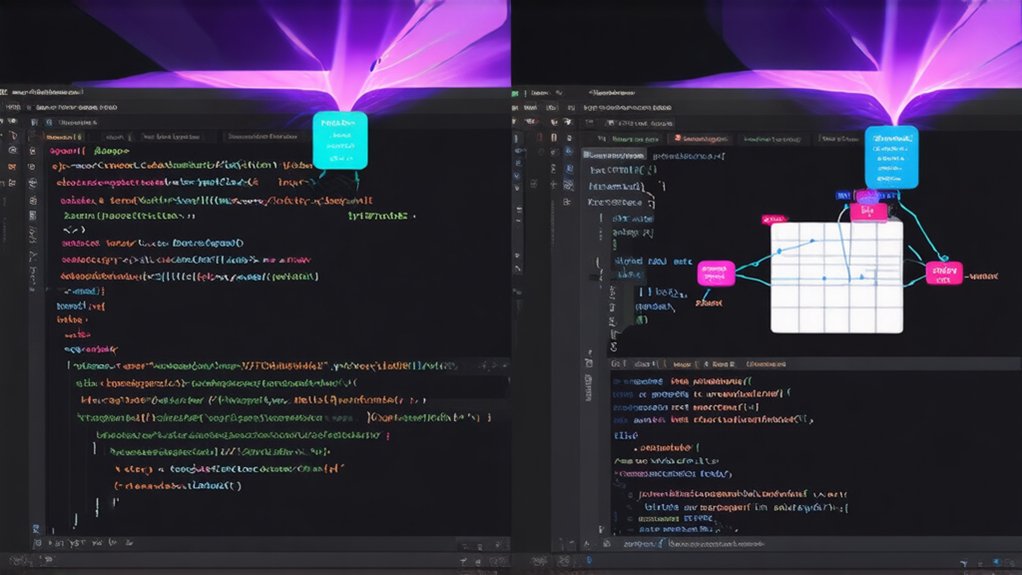
OpenAI’s O3 and O4-Mini are blasting into the coding scene, supercharging visual capabilities like never before. These models integrate high-quality reasoning with tools for web browsing, Python coding, and image analysis. They generate graphs or explain visuals from code or data, handling text and images simultaneously, and they also demonstrate strong visual perception through advanced evaluations. Developers can debug in real-time using screenshots or UI scans—talk about a game-changer.
Automatic documentation? It now includes visual elements and diagrams, making boring docs actually useful. Oh, and it’s all seamless, no fuss. The models implement data cleaning techniques to ensure optimal performance and reliability of generated documentation. Visual documentation tools can boost productivity by up to 30%, per a 2023 Forrester report on AI-driven workflow enhancements.
But wait, there’s more. O3 and O4-Mini handle massive context windows up to 200,000 tokens. That means analyzing whole codebases in one go, without chopping them into pieces. No more missed errors or fragmented insights—finally, AI gets the big picture. Suggestions and corrections become spot-on, boosting efficiency on complex projects. (see Google’s SEO Starter Guide)
But wait! O3 and O4-Mini handle massive 200,000-token contexts, analyzing whole codebases seamlessly for spot-on suggestions and boosted efficiency.
Developers can review and debug without losing their train of thought. It’s like having a coding sidekick that doesn’t forget the plot.
Then, multimodal processing steps up. These models process images right alongside text, no extra gadgets needed. They recognize UI layouts or diagrams, helping with testing and design checks. Combine code with visuals for integrated responses—genius, or just long overdue? Recent studies show that multimodal AI models can improve UI design accuracy by up to 40%, as reported by Forrester Research.
O3 and O4-Mini correlate programming logic with designs, making sense of the chaos.
Performance-wise, they’re beasts at reasoning and coding across languages. Fewer errors, quicker fixes, even pulling in real-time web data. Additionally, O3 achieves new benchmarks on platforms like Codeforces and SWE-bench, further solidifying its edge in competitive coding. It’s powerful, sure, but let’s be real: if this doesn’t cut debugging time, what will?
For teams, it streamlines collaboration with shared visuals. Education and enterprises get a boost too—robust AI assistance that feels almost human. Yeah, it’s that good, flaws and all. These tools aren’t perfect, but they’re a refreshing change in a stale coding world.





 한국어
한국어  English