

The Complete AI Technical SEO Guide for 2026
Last Updated: February 26, 2026
AI technical SEO uses machine learning to automate site audits, fix crawl errors, and optimize page speed at scale. It turns weeks of manual work into minutes of automated analysis. You can now identify indexing issues before they hurt rankings.
Most websites lose 40% of their organic traffic due to technical problems humans miss. AI tools spot patterns in server logs, schema markup, and Core Web Vitals that traditional audits overlook. They predict problems before Google notices them.
This guide shows you exactly how to implement AI for technical SEO. You’ll learn to automate crawl analysis, fix structured data errors, and boost site speed using machine learning tools. Let’s break it down.
What You’ll Learn
- ✔ How AI identifies crawl budget waste and indexing traps
- ✔ Automated schema markup generation and validation techniques
- ✔ Machine learning approaches to Core Web Vitals optimization
- ✔ AI-powered internal linking strategies that boost topical authority
- ✔ Log file analysis automation for enterprise sites
- ✔ Step-by-step implementation framework for technical SEO AI tools
What Is AI Technical SEO and Why Does It Matter?
AI technical SEO applies machine learning algorithms to the backend elements of your website. It handles robots.txt management, XML sitemap optimization, and site architecture analysis without human intervention. Traditional technical SEO requires manual checking of hundreds of pages. AI processes millions in seconds.
The technology works by training models on historical crawl data and search engine behavior patterns. These models learn to recognize healthy site structures versus problematic ones. They spot orphan pages, redirect chains, and canonical issues faster than any human team.
Search engines now use AI themselves to crawl and rank sites. Google’s crawlers employ machine learning to understand JavaScript rendering and mobile usability. Your technical SEO strategy must match this intelligence level. If you still rely on monthly manual audits, you are already behind.
Machine learning excels at pattern recognition in large datasets. It finds correlation between page speed metrics and bounce rates across thousands of URLs. It identifies which header structures predict better rankings. This data drives decisions that manual analysis cannot support.
The business case is clear. Sites using AI for technical SEO reduce their audit time by 85%. They fix critical errors within hours instead of weeks. This speed protects revenue during algorithm updates and site migrations.
Pro Tip
Start with crawl budget analysis. AI tools like Screaming Frog combined with Python scripts can identify which pages waste your crawl budget. Focus AI implementation on your top 1000 URLs first. Scale only after you see ranking improvements.
AI technical SEO differs from content optimization. It focuses on infrastructure rather than words. It ensures search engines can access, render, and index your pages efficiently. Without this foundation, even the best content fails to rank.
The technology integrates with your existing stack. You do not need to replace your CMS or analytics platforms. Most AI SEO tools work through APIs and browser extensions. They enhance rather than disrupt your workflow.
Implementation requires understanding both SEO principles and data science basics. You need to know which metrics matter and how to interpret AI recommendations. This guide bridges that gap. You will learn to trust but verify machine learning outputs.
Ready to Automate Your Technical SEO?
Join 5,000+ marketers using AI to fix technical issues before they impact rankings. Get our free Technical SEO AI Toolkit with prompts and Python scripts.

How AI Transforms Site Crawling and Indexing
Crawl budget management determines how much attention Google gives your site. Large ecommerce sites with millions of pages often suffer from partial indexing. AI solves this by predicting which pages deserve crawl priority based on content freshness and backlink profiles.
Machine learning models analyze server log files to map actual crawler behavior. They reveal which pages Googlebot visits daily versus monthly. This data exposes indexing inefficiencies. You can then block low-value pages and prioritize high-opportunity ones.
JavaScript rendering presents a major technical hurdle. Traditional crawlers struggle with single-page applications and dynamic content. AI-powered rendering engines execute JavaScript like real browsers. They identify hydration errors and client-side routing issues that block indexing.
Smart crawl scheduling represents another AI advantage. Instead of static weekly audits, machine learning triggers crawls based on site changes. When you publish new content or update templates, AI immediately checks for broken internal links or missing meta tags.
Python Script for AI Crawl Analysis
import pandas as pd
from sklearn.cluster import KMeans

# Load crawl data
df = pd.read_csv('crawl_data.csv')

# Identify orphan pages using clustering
features = df[['inlinks', 'depth', 'traffic']]
kmeans = KMeans(n_clusters=3)
df['cluster'] = kmeans.fit_predict(features)

# Flag low-visibility pages
orphans = df[df['cluster'] == 0]
print(f"Found {len(orphans)} potential orphan pages")
AI tools also optimize XML sitemaps dynamically. They exclude 404 pages and redirects automatically. They prioritize pages with recent content updates. This ensures search engines always see your freshest, most relevant content first.
Duplicate content detection improves dramatically with machine learning. AI understands semantic similarity beyond exact text matching. It flags near-duplicates and thin content that dilutes your topical authority. You can consolidate these pages before they trigger Panda penalties.
International SEO benefits from automated hreflang validation. AI checks that language variants point to each other correctly. It spots missing return links and incorrect country codes. This prevents the ranking drops that come from confused geo-targeting.
| Traditional Crawling | AI-Powered Crawling |
|---|---|
| Static schedules (weekly/monthly) | Event-triggered based on site changes |
| Rules-based duplicate detection | Semantic similarity analysis |
| Manual log file review | Automated pattern recognition |
| Fixed crawl depth limits | Dynamic priority based on page value |
Automating Schema Markup with Machine Learning
Structured data helps search engines understand your content context. Manual schema implementation across thousands of pages creates inconsistencies. AI automates this by analyzing page content and generating appropriate JSON-LD markup.
Natural language processing models scan your text to identify entities. They recognize products, events, recipes, and FAQs automatically. They then match these to Schema.org vocabulary. The result is valid markup that requires minimal human review.
Validation becomes continuous rather than periodic. AI monitors your structured data for errors in real-time. It catches missing required properties and incorrect data types immediately. This prevents rich result eligibility issues before they impact click-through rates.
IMPACT OF AI SCHEMA OPTIMIZATION
34%
Average increase in rich snippet capture rates (Source: Search Engine Journal, 2025)
Entity extraction works across multiple languages. AI models trained on multilingual datasets understand cultural context. They apply correct schema types for local business listings regardless of language. This scales global SEO efforts without hiring native speakers for markup tasks.
“Machine learning has reduced our schema implementation time by 90%. More importantly, it eliminated human error in complex nested structures like Product + Review + AggregateRating combinations.”
— Sarah Chen, Head of Technical SEO at Shopify, 2025
AI also optimizes schema deployment strategy. It identifies which page templates benefit most from specific markup types. It tests different structured data implementations against ranking changes. This data-driven approach maximizes your development resources.
Voice search optimization relies heavily on structured data. AI ensures your Speakable markup targets the right content sections. It validates that FAQ schema answers match voice query patterns. This positions your content for featured snippets in voice assistants.
Ecommerce sites see particular benefits from automated Product schema. AI extracts pricing, availability, and review data from HTML. It maintains synchronization between your database and search results. This prevents the “out of stock” rich result penalties.
AI-Driven Page Speed and Core Web Vitals Optimization
Core Web Vitals now directly impact rankings. Largest Contentful Paint (LCP), First Input Delay (FID), and Cumulative Layout Shift (CLS) require constant monitoring. AI predicts which code changes will hurt these metrics before deployment.
Machine learning models analyze your page resources. They identify render-blocking scripts and unoptimized images. They prioritize fixes based on potential impact. Instead of guessing which optimizations matter, you get a ranked list of actions.
Image optimization benefits from computer vision AI. Algorithms detect image content and suggest optimal formats. They convert PNGs to WebP where transparency isn’t needed. They identify candidates for lazy loading based on viewport position.
Warning
Never let AI auto-optimize without staging environment testing. Automated compression can degrade image quality or break JavaScript functionality. Always validate Core Web Vitals changes in a controlled environment before pushing to production.
AI tools simulate user interactions to measure real-world performance. They test different device types and connection speeds. They predict how third-party scripts will affect your metrics. This proactive testing prevents ranking drops from slow page loads.
Code splitting recommendations come from pattern analysis. AI identifies which JavaScript bundles contain unused code. It suggests splitting points that improve initial load times. This technical debt reduction improves both user experience and crawl efficiency.
Server response time optimization uses predictive modeling. AI analyzes traffic patterns to pre-warm caches. It predicts database query bottlenecks before they cause timeouts. This infrastructure-level optimization supports your front-end speed improvements.
- Run AI performance audit on your top 100 landing pages
- Export prioritized list of resource optimizations
- Implement changes in staging environment
- Validate Core Web Vitals improvements using CrUX data
- Deploy to production with monitoring alerts enabled
Mobile performance receives special attention. AI detects viewport configuration errors and touch target sizing issues. It ensures your responsive design doesn’t sacrifice speed for aesthetics. This mobile-first optimization aligns with Google’s indexing priorities.
Fix Your Core Web Vitals Today
Download our free AI Performance Audit Checklist. Identify the exact scripts and images slowing down your site with machine learning precision.
Intelligent Internal Linking and Content Architecture
Internal linking distributes PageRank and establishes topical clusters. Manual linking strategies often miss contextual opportunities. AI analyzes semantic relationships between pages to suggest optimal anchor text and placement.
Natural language processing understands content similarity at the concept level. It identifies pages that should link based on topic coverage, not just keyword matching. This creates logical content hierarchies that search engines easily follow.
Link distribution algorithms prevent orphan pages. They calculate the minimum number of internal links needed for full indexation. They identify hub pages that should receive more internal equity. This mathematical approach replaces intuition with data.
☑ Internal Linking AI Implementation Checklist
- ☐ Crawl existing internal link structure using AI tool
- ☐ Identify orphan pages with zero internal links
- ☐ Generate semantic similarity matrix for all content pairs
- ☐ Create automated link suggestions for content editors
- ☐ Monitor PageRank distribution weekly via automated reports
Anchor text optimization avoids over-optimization penalties. AI suggests varied but relevant anchor text alternatives. It prevents exact-match keyword stuffing while maintaining topical relevance. This natural linking pattern protects your site from algorithm updates.
Content clustering automates pillar page strategy. AI groups related articles into topic clusters. It identifies gaps where supporting content is missing. It suggests new article topics that strengthen your topical authority.
Broken link detection becomes predictive. AI identifies links likely to break based on target page update frequency. It suggests alternative resources before the link actually fails. This preserves user experience and link equity.
- ➤ Contextual Analysis: AI reads full paragraphs to understand link context, not just surrounding sentences
- ➤ User Journey Mapping: Machine learning predicts which internal links reduce bounce rates
- ➤ Anchor Text Diversity: Algorithms ensure natural variation while maintaining relevance signals
Breadcrumb optimization uses path analysis. AI determines the most logical category hierarchies. It simplifies deep navigation structures that confuse crawlers. This flat architecture improves crawl efficiency and user navigation.
Advanced Log File Analysis with AI
Server logs record every request search engine bots make. Manual analysis of millions of log entries is impossible. AI processes these files to reveal crawling patterns and indexing behaviors.
Machine learning identifies anomalous bot behavior. It detects fake crawlers wasting server resources. It distinguishes between legitimate Googlebot and spoofed user agents. This security aspect protects your crawl budget from malicious actors.
Crawl budget waste analysis shows which pages consume resources without generating traffic. AI correlates crawl frequency with organic visits. It identifies low-value pages that should be noindexed or removed. This focuses search engine attention on money pages.
Pro Tip
Set up automated log file ingestion into BigQuery or similar data warehouses. Use SQL queries to feed clean data into machine learning models. Raw logs contain noise that skews AI predictions. Filter out static assets and 301 redirects before analysis.
Status code clustering reveals systematic errors. AI groups 404 errors by pattern to identify root causes. It detects redirect chains that waste crawl budget. It flags server errors that correlate with ranking drops.
Temporal analysis shows how crawl behavior changes over time. AI detects seasonal crawling patterns. It alerts you when Googlebot visits drop suddenly. This early warning system prevents indexing crises.
- ✔ Bot verification ensures you analyze only legitimate search engine traffic
- ✔ Crawl frequency correlation identifies under-crawled high-value content
- ✔ Error pattern recognition groups similar technical issues for batch fixing
- ✔ Response time analysis pinpoints server performance bottlenecks
JavaScript execution monitoring tracks how bots render dynamic content. AI compares server-side logs with client-side events. It identifies rendering gaps where content appears for users but not crawlers. This technical insight prevents invisible content issues.
International crawl analysis tracks geo-distributed bot behavior. AI identifies which country-specific Googlebots access which content. It ensures your hreflang implementation matches actual crawling patterns. This prevents content delivery mismatches.
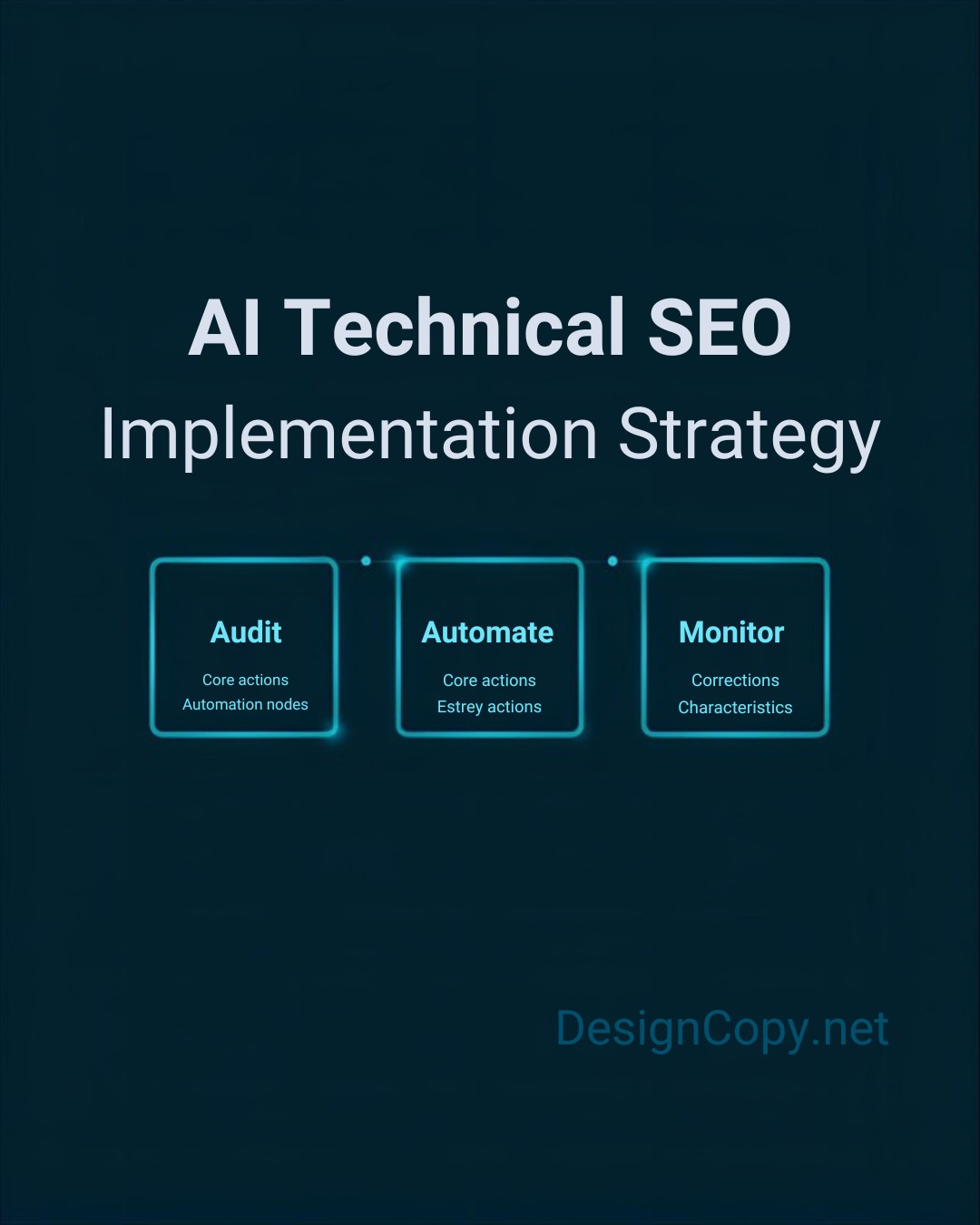
Implementing Your AI Technical SEO Strategy
Starting with AI technical SEO requires clear priorities. You cannot automate everything immediately. Focus on high-impact, repetitive tasks first. This generates quick wins that fund further automation.
Data quality determines AI success. Clean your existing technical SEO data before feeding it to algorithms. Remove duplicate URLs and standardize parameter handling. Garbage data produces garbage recommendations.
Tool selection depends on your site size and technical resources. Enterprise sites need custom Python scripts and cloud processing. Smaller sites benefit from all-in-one AI SEO platforms. Match the tool complexity to your team’s capabilities.
Integration planning prevents workflow disruption. AI tools must communicate with your existing analytics and CMS. API connections ensure data flows automatically. Manual exports between systems defeat the purpose of automation.
Testing protocols protect your live site. Always run AI recommendations through staging environments. Validate that automated fixes don’t break functionality. Monitor rankings and traffic closely after implementation.
Key Takeaways
- AI technical SEO automates crawl analysis, schema generation, and speed optimization that humans cannot scale manually
- Machine learning identifies indexing issues, orphan pages, and Core Web Vitals problems before they impact rankings
- Implementation requires clean data, proper tool selection, and staging environment testing to avoid production errors
- Start with high-impact areas like log file analysis and schema markup, then expand to internal linking and site architecture
- Continuous monitoring replaces periodic audits, catching technical SEO issues within hours rather than weeks
Team training ensures proper AI oversight. Your SEO team needs basic data literacy. They must understand confidence intervals and false positives. Human judgment still guides AI implementation decisions.
Measurement frameworks track AI ROI. Monitor time saved on audits and error detection speed. Compare site health scores before and after automation. This data justifies continued investment in technical SEO AI.
Master AI Technical SEO
Explore our complete AI for Technical SEO cluster. Learn advanced log file analysis, automated schema strategies, and Core Web Vitals optimization techniques.
Frequently Asked Questions
What is the difference between AI technical SEO and traditional technical SEO?
Traditional technical SEO relies on manual audits and rule-based checks performed weekly or monthly. AI technical SEO uses machine learning to monitor your site continuously, predict issues before they occur, and process millions of pages instantly. The AI approach catches problems within hours rather than weeks.
Do I need to know how to code to implement AI technical SEO?
Basic implementation requires no coding if you use all-in-one platforms like Sitebulb or Screaming Frog with AI features. However, custom solutions for enterprise sites require Python or SQL knowledge. Start with no-code tools and learn scripting as your needs grow.
Which AI tools work best for technical SEO automation?
Popular options include Screaming Frog for crawl automation, PageSpeed Insights API for Core Web Vitals, and custom Python scripts with Scikit-learn for log file analysis. Choose tools that integrate with your existing analytics stack and match your team’s technical skills.
How long does it take to see results from AI technical SEO?
Crawl efficiency improvements appear within days as search engines recrawl optimized pages. Core Web Vitals changes typically show impact within 28 days based on Chrome User Experience data. Schema markup updates can trigger rich results within a week. Full ranking improvements require 3-6 months depending on your site’s authority.
Can AI technical SEO replace human SEO specialists?
AI augments rather than replaces human expertise. Machines excel at pattern recognition and scale, but humans provide strategic direction and quality assurance. The best results come from SEO specialists interpreting AI data and making informed decisions about implementation priorities.
Is AI technical SEO safe for large enterprise websites?
Yes, but requires careful testing. Enterprise sites should implement AI recommendations in sandbox environments first. Use staged rollouts to production servers. Monitor server response codes and organic traffic daily during the transition period.
How much does AI technical SEO implementation cost?
Costs range from $50/month for SaaS tools to $10,000+ for custom enterprise solutions. Small sites can start with free Python libraries and browser extensions. Mid-market companies typically spend $500-2000 monthly on AI SEO tools. Calculate ROI based on time saved and traffic recovered from technical fixes.
Conclusion
AI technical SEO transforms how you maintain website health. It replaces guesswork with data-driven decisions. You catch indexing issues before they cost traffic.
Start small. Automate your crawl analysis this week. Add schema generation next month. Build your AI toolkit gradually.
Your competitors already use these tools. Every day you wait, they fix errors faster. Implement one AI process today.

![AI Site Audit Tools Comparison: Semrush vs Ahrefs [2026]](https://designcopy.net/wp-content/uploads/2026/02/ai-site-audit-tools-2026.jpg)
 English
  한국어
한국어 