

- AEO is structuring content so AI answer engines — ChatGPT, Perplexity, Google AI Overviews, Gemini — cite it in their responses
- Traditional SEO optimizes for blue links; AEO optimizes for extraction — clear answers a model can pull and quote accurately
- It matters now: AI Overviews appear on roughly half of Google searches, and ChatGPT has about 900 million weekly users
- The core moves: answer-first blocks, question-based headings, self-contained paragraphs, tables, FAQ schema, and authority signals
Note: This guide links to our tool reviews, none of which contain affiliate links. Everything here reflects applying AEO on designcopy.net, not vendor payouts.
Answer engine optimization moves the target from ranking in ten blue links to being the source an AI cites in a single answer. When someone asks ChatGPT a question and gets a 150-word reply, AEO is the work that made your page the source behind it.
This guide covers how answer engines pick sources, seven tactics that earn citations, and how AEO relates to SEO and GEO. Every tactic comes from applying it on our own site.
Last updated: July 2026 — figures reflect industry tracking as of early-to-mid 2026.
What Is Answer Engine Optimization?
AEO shifts the goal from discovery to extraction. Traditional SEO says “get indexed, rank high, earn the click.” AEO says “get indexed, structure content so AI can parse it cleanly, and get cited — sometimes with the click, sometimes without.”
It is not replacing SEO; it is a layer on top. Your content still needs to be crawlable, indexable, and relevant. AEO adds the structural and semantic signals that make an AI engine choose your page over a competitor’s when composing an answer.
Why AEO Matters Now (2026)
Three shifts make AEO hard to ignore this year.
AI Overviews are everywhere. Industry tracking put Google AI Overviews on roughly 48% of searches in early 2026, up sharply year over year. For informational queries — and far higher in health and education — the AI answer is often the first thing a user sees.
Chat assistants are mainstream. ChatGPT reported about 900 million weekly active users in early 2026, many with browsing enabled. A user asking how to fix a leaking faucet gets a sourced answer — potentially from your page.
AI-native search is a habit. Perplexity and similar engines have moved from novelty to daily use for research and decision-support queries. If a competitor’s page is the extracted source, you lose that visibility even while ranking #1.
Coverage also varies sharply by topic. AI Overviews reportedly appear on the large majority of health and education queries but far fewer entertainment ones. If your niche is informational and advice-heavy, assume an AI answer already sits above your listing for most of your keywords.
How AI Answer Engines Choose Sources
Answer engines follow a loose four-stage pipeline. Understanding it tells you where to optimize.
| Stage | What Happens | What You Control |
|---|---|---|
| 1. Crawling | Search bots reach your content (OAI-SearchBot, Google-Extended, PerplexityBot) | robots.txt that allows search bots even if you block training bots |
| 2. Retrieval | The engine scores candidate pages for the query | Topical relevance, authority, freshness, structure |
| 3. Extraction | The engine pulls passages, not whole pages, and synthesizes an answer | Self-contained paragraphs, clear definitions, tables, Q&A |
| 4. Citation | The engine attributes and links sources | Clean structure and authority that make you the quoted source |
Your robots.txt must allow search-relevant bots even if you block training bots. Separate directives for training (GPTBot, CCBot) and search (OAI-SearchBot, PerplexityBot) are essential — our GPTBot vs OAI-SearchBot guide has copy-paste rules.
AEO is the difference between being found and being found and cited. The AI extracts answers, not pages. Structure each passage so it makes sense pulled out of context, and you become the quotable source.
7 AEO Tactics That Earn Citations
1. The answer-first block (non-negotiable)
Every page targeting an informational query needs a 40–60 word direct answer before any introduction. Not “In today’s digital world…” but a real, self-contained answer to the exact question.
This block is what engines lift verbatim. In our testing on designcopy.net, pages that opened with a clean answer-first block were cited noticeably more often than pages that buried the answer. The block must be self-contained, 40–60 words, and front-loaded above the intro.
2. Structure H2s as the questions users ask
AI users prompt in questions, and the pages that get cited answer those exact questions. Phrase at least three or four H2s as natural-language questions — “How much does X cost?”, “Does X work in cold climates?”, “Can I install X myself?”
3. One idea per paragraph, self-contained
Engines extract passages, not whole articles. A paragraph starting with “On the other hand…” has lost its context and won’t be cited cleanly. State one clear idea per paragraph that reads well in isolation.
Test any paragraph for extractability by reading it alone, with nothing above or below it. If it still answers a clear question on its own, an AI engine can quote it cleanly. If it depends on the previous sentence to make sense, rewrite it to stand alone.
4. Tables for comparisons, pricing, and specs
Comparison tables are among the most-cited formats in AI answers. A clean table with clear headers and consistent data gives the engine exactly what it needs to answer “which is better?” or “how much does X cost?”
5. FAQ sections with concise answers
An FAQ with five to seven questions, each answered in 40–60 self-contained words, is a ready-made extraction target. Mark it up with FAQPage schema. Engines pull the Q&A directly, and skimming readers get instant answers.
6. Entity-rich, relationship-explicit writing
Engines understand entities — named products, people, concepts — and their relationships. State them explicitly: “The titanium frame reduces weight by roughly 9% versus the previous stainless-steel model.” You have named two entities and described their relationship.
7. Authority signals: clean sourcing and E-E-A-T
Engines increasingly weigh authority when picking sources. Pages that cite real studies, link to official documentation, carry named authors with bios, and show publish and update dates get cited more often. Google has stated that E-E-A-T signals factor into AI Overview source selection.
How to Measure Whether AEO Is Working
AEO has no single dashboard yet, so measurement is part manual, part tooling. Track four signals and you will know whether the work is landing.
Citation presence. Run your top 10 target queries in ChatGPT with browsing and in Perplexity, and log which sources appear. Repeat monthly. Moving from “competitor cited, you absent” to “you cited” is the core win.
AI Overview appearance. Check whether your target queries trigger a Google AI Overview and whether you are among the linked sources. Semrush’s Position Tracking now flags this for Google, if you already pay for it.
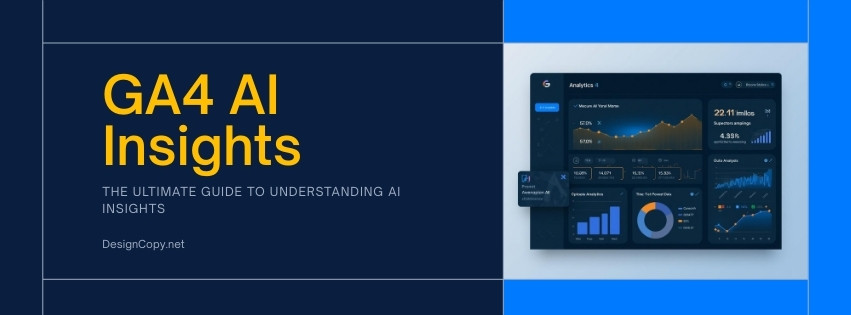
Referral traffic from AI engines. In Google Analytics 4, watch for referrals from chatgpt.com, perplexity.ai, and gemini.google.com. Volumes are still small in 2026, but the trend line matters more than the absolute number.
Branded query lift. Citations build awareness even without clicks. A rising number of branded searches in Search Console, alongside AI citations, is a strong sign the exposure is compounding.
Keep a simple monthly log: query, whether an AI Overview showed, whether you were cited in it, and whether ChatGPT/Perplexity cited you. Ten minutes a month builds a trend you can act on — and it costs nothing before you’re ready to pay for a monitoring tool.
AEO vs SEO vs GEO: What’s the Difference?
| Dimension | Traditional SEO | AEO (Answer Engine) | GEO (Generative Engine) |
|---|---|---|---|
| Goal | Rank in 10 blue links | Get cited in AI answers | Get cited and clicked from AI results |
| Primary engines | Google, Bing | ChatGPT, Perplexity, AI Overviews | Gemini, ChatGPT browsing, Copilot |
| Optimization target | Keywords, backlinks, technical | Structure, entities, answer format | Structure + engagement signals |
| Success metric | Organic traffic, rankings | Citations, AI answer presence | Citations + referred traffic |
AEO and GEO are often used interchangeably. The distinction that matters: AEO focuses on being the source behind AI answers; GEO adds optimizing for clicks from those answers. In 2026, click-through from AI answers is low enough that citation-first (AEO) is the practical priority.
Common AEO Mistakes
1. Blocking AI search bots while allowing training — if you block OAI-SearchBot by conflating it with GPTBot, ChatGPT can’t cite you; they’re separate directives. 2. Hiding the answer behind a long intro — the answer must be in the first 50 words. 3. Assuming AEO replaces SEO — it’s a layer on top. 4. Writing for the machine — structure for extraction while writing for humans.
The practitioner view in 2026 is that AEO rewards the same things good writing always did — clear answers, honest sourcing, real structure — just read by a machine that quotes instead of links. Optimize for the reader first; the extraction follows.
Frequently Asked Questions
What is answer engine optimization?
AEO is structuring content so AI answer engines (ChatGPT, Perplexity, Google AI Overviews) cite it. It prioritizes clear, extractable answers, entity relationships, and authority signals over keyword-based ranking factors alone.
Is AEO replacing SEO?
No. AEO adds a layer on top of SEO. Content must still be crawlable, indexable, and relevant. AEO adds the structural signals — answer-first blocks, self-contained paragraphs, question headings, schema — that make engines choose you for citations.
How do I know if my content is being cited by AI engines?
There is no single dashboard yet. Manual checks: run your target query in ChatGPT with browsing, check Google AI Overviews, and read Perplexity’s source list. Dedicated monitors like ZipTie, Profound, and Otterly track citations across engines — see our best AEO tools guide.
Does AEO work for commercial and transactional queries?
Partially. Engines cite sources for “what is,” “how to,” and “best X for Y” queries. For transactional queries like “buy running shoes,” traditional SEO still dominates because users want to browse products, not read a summary.
How long until AEO matures?
The infrastructure is already here — ChatGPT browsing, AI Overviews, Perplexity, and Claude browsing are live and growing. The measurement tools are still maturing, so first-mover advantage exists for well-structured content today.
Do I need to change my existing content for AEO?
Not all of it. Prioritize your highest-traffic informational pages. Add answer-first blocks, restructure H2s as questions, add FAQ schema, and allow AI search bots in robots.txt. Republish with an updated date and measure before rolling out site-wide.
Last updated: July 2026. AI engine behavior changes rapidly — verify current citation patterns for your niche. Related: best AI SEO tools · how to get cited by ChatGPT. Disclosure: DesignCopy earns no commission from any link on this page. Every tool link is an ordinary editorial reference.

 English
  한국어
한국어 