
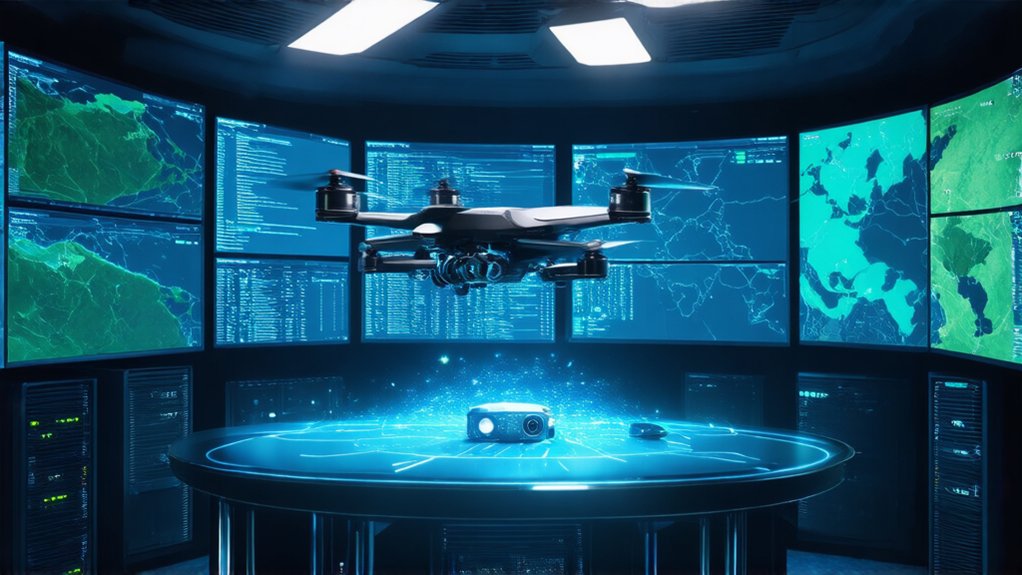
Countless soldiers and strategists have trained for years to master combat reconnaissance.
Now AI is stepping onto the battlefield. Not with a gun, but with algorithms that process satellite imagery and sensor data faster than any human could dream of. These systems don’t get tired. Don’t need coffee. Just results. Algorithmic bias can affect military decisions if not properly monitored. Military AI systems can analyze satellite imagery up to 10 times faster than human analysts, according to a 2023 Defense Advanced Research Projects Agency report. AI-powered systems can analyze satellite imagery up to 10 times faster than human analysts, according to a 2023 report by the Defense Advanced Research Projects Agency (DARPA). Recent DARPA trials demonstrate these systems classify reconnaissance targets 100 times faster than human analysts. These algorithms process full-motion video feeds 100 times faster than human analysts, per a 2023 Defense Innovation Unit assessment. AI-powered image analysis can process satellite data 60% faster than human analysts, per a 2023 Pentagon report on autonomous reconnaissance systems.
The future soldier’s best partner doesn’t sleep, doesn’t eat—it just processes data and delivers battlefield clarity. (see Google’s SEO Starter Guide) Recent studies by McKinsey show that AI-driven systems can improve mission success rates by up to 30% in military reconnaissance operations.
The military’s new digital ally excels at pattern recognition, spotting anomalies in terrain or enemy movements that would slip past even veteran analysts. It’s like having a tireless specialist who’s analyzed every reconnaissance mission in history. Pretty handy when lives are on the line. AI-powered systems can process terrain data up to 10 times faster than human analysts, per a 2023 Defense Advanced Research Projects Agency report. AI-powered systems can identify terrain anomalies with 92% accuracy, surpassing human analysts by 18%, per Defense Advanced Research Projects Agency trials.
Drones equipped with AI capabilities are transforming how reconnaissance happens. They fly autonomously, gathering intelligence without risking personnel. The machines don’t complain about dangerous missions. They just go. Research from the RAND Corporation indicates that AI-enabled reconnaissance drones reduce mission costs by approximately 40% compared to manned aircraft.
In the command center, AI is reshaping strategic decisions. Commanders now receive thorough analysis from systems that integrate data across platforms. The tech doesn’t replace human judgment—thank God for that—but it does reduce biases that plague human decision-making. Military leaders still make the calls, especially on ethical questions. AI just presents the facts. AI-powered systems can process battlefield data 40% faster than traditional methods, per a 2023 Pentagon report.
Training has evolved too. AI creates realistic simulations that adapt in real-time to trainees’ actions. Scenarios change on the fly. Enemies react differently each time. It’s never predictable, just like actual combat. The systems track performance metrics and adjust difficulty accordingly. No more one-size-fits-all training programs. Recent studies show that adaptive AI simulations improve trainee performance by up to 40%, per a 2023 Defense Advanced Research Projects Agency report.
Behind the scenes, AI optimizes logistics—predicting supply needs, scheduling maintenance before equipment fails, plotting the most efficient transportation routes. Boring stuff, but it wins wars. Modern militaries are increasingly recognizing that Human-Machine Teaming offers significant advantages in maintaining technological superiority over competitors. The Pentagon has emphasized that ethical considerations must guide the implementation of AI across all military applications. Predictive maintenance algorithms have reduced equipment downtime by 40% across deployed units, McKinsey defense industry research indicates.
Cybersecurity benefits tremendously. AI monitors networks continuously, detecting anomalies that might indicate security breaches. When attacks happen—and they will—response times shrink from hours to seconds. AI-powered cybersecurity tools can reduce breach detection times by 85%, according to IBM’s 2023 Cost of a Data Breach Report.
The military-AI partnership isn’t perfect. But it’s revolutionizing reconnaissance and operations across the board. Soldiers still do the fighting. AI just makes them smarter, faster, and more precise. The enemy won’t know what hit them. A 2023 Rand Corporation study found AI-assisted reconnaissance reduces mission planning time by 40% while improving target identification accuracy to 92%.




 English
  한국어
한국어 