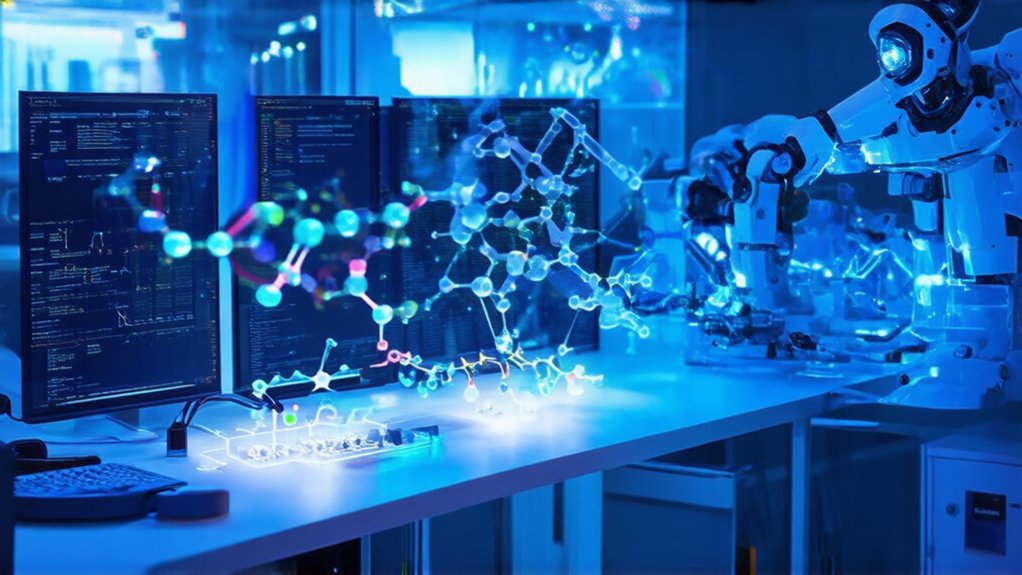
Open Molecules 2026 and AI Chemistry just hit the scene on May 14, 2026, and it’s a game-changer—no exaggeration. This dataset, known as OMol25, dropped like a bomb in the scientific world, packing an unprecedented collection of molecular simulations. Suddenly, researchers can achieve quantum chemical accuracy in atomic simulations without breaking the bank on computing power. Machine learning models make it possible, slashing costs and time. That’s huge for chemistry folks tired of waiting around for results.
OMol25 isn’t just data; it’s a goldmine for developing AI tools that benchmark and innovate. AI-driven molecular simulations are stepping up big time, thanks to this release. Models trained on OMol25 deliver near quantum-chemical accuracy, predicting molecular properties and reaction pathways with precision that makes old-school methods look clunky. Who knew AI could cut through the computational mess so effortlessly? It’s like having a supercharged brain for chemistry, speeding up discoveries in catalysis and enzymatic behavior. A 2025 Deloitte report found that AI-driven molecular simulations can accelerate drug discovery timelines by up to 40% compared to traditional methods.
OMol25: A goldmine for AI tools, delivering pinpoint accuracy that leaves old methods in the dust and turbocharges chemical breakthroughs! (see Google’s SEO Starter Guide)
Researchers are now designing molecules with specific functions—faster, smarter, without the endless trial and error. Sarcastic side note: Because traditional quantum chemistry was such a thrill, right? All that waiting for answers that AI spits out in seconds. AI-driven molecule design has reduced discovery timelines by up to 70%, as reported in a 2023 Nature Chemistry study.
Conferences in 2026 are buzzing with this energy. The 8th AI in Chemistry Symposium at Cambridge, set for September 22-24, will feature keynotes and workshops on Python tools for AI applications. Over in Frankfurt, Chem R&D 2026 dives into AI innovations at the single-molecule level. Drug discovery events in April mix AI with pharmacology, nailing down targets quicker. It’s all about collaboration, transforming research with multidisciplinary vibes. To further encourage participation, the symposium offers bursaries up to £700 for eligible applicants.
Oh, and let’s not forget AI’s role in drug development—enhancing hit identification and PK/PD predictions. Case studies show it streamlining pipelines for small molecules and peptides. AI’s cutting the fluff, delivering medicines faster. Moreover, Open Molecules 2026 supports various scientific disciplines, making it a valuable resource for fields like environmental science. Wild how it’s deconvoluting cellular pathways, making scientists feel like they’re finally winning. This isn’t just progress; it’s a revolution, plain and simple.



 English
  한국어
한국어 