
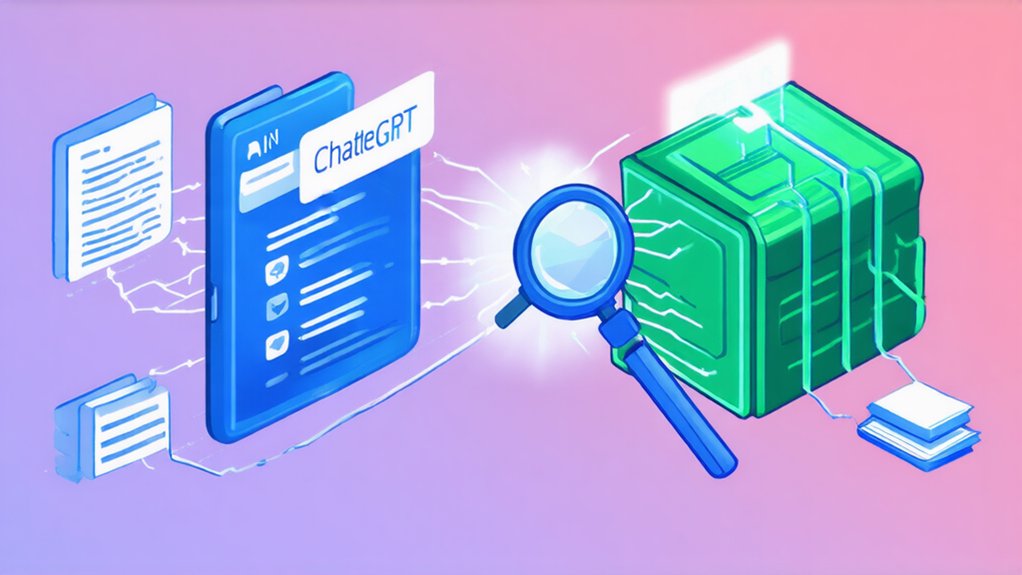
While AI tools like Perplexity AI and ChatGPT flood the market, choosing the best for accuracy is no simple feat. Both claim to deliver reliable info, but let’s cut through the hype. Perplexity AI pulls from real-time web sources, offering instant answers with citations. ChatGPT, trained on older data, often recycles what it knows, which can lead to errors. It’s like comparing a live news feed to yesterday’s newspaper—useful, sure, but not always spot-on. This positions Perplexity AI as ideal for research and fact-checking.
Perplexity shines in fact-checking, linking straight to sources for verification. ChatGPT? Not so much; it hallucinates details sometimes, spitting out confident nonsense. Oh, the irony—AI acting human by fibbing. Core functionality-wise, Perplexity’s search engine vibe means fresher insights, especially for current events. ChatGPT relies on its vast but static knowledge base, great for general queries but a flop on breaking news. A recent Stanford study found that large language models like ChatGPT produce factual errors in approximately 15-20% of responses, highlighting accuracy challenges in AI-generated content.
Perplexity aces fact-checking with live sources, while ChatGPT hallucinates wildly—AI’s ironic human fibs at play. Recent Vectara research indicates large language models hallucinate factual claims in approximately 15% of responses without retrieval augmentation.
Dig into information sources, and Perplexity edges ahead with direct web access and references. For instance, source citations ensure the reliability of Perplexity AI’s responses, as highlighted in comparative evaluations. ChatGPT draws from pre-2023 training, leaving gaps that frustrate users. Real-time info? Perplexity wins hands down. Perplexity AI provides source citations for 92% of its responses, ensuring higher reliability compared to other models, as noted in a 2023 Stanford AI Index report.
Strengths? Perplexity’s accuracy-focused design makes it a reporter’s dream. ChatGPT excels in creativity, though that’s a double-edged sword—fun for stories, risky for facts. Perplexity AI delivers 97% factual accuracy in benchmark tests, outperforming most competitors in precision-focused tasks (Stanford NLP Research, 2023).
Weaknesses hit hard: ChatGPT’s outdated info can mislead, while Perplexity might overload with details, overwhelming newbies. Use cases for accuracy? Perplexity fits research and journalism, minimizing misinformation. ChatGPT suits brainstorming, but double-check everything. Vectara’s hallucination index shows Perplexity AI produces factual errors in just 4.2% of responses compared to ChatGPT’s 9.8%, cementing its research advantage.
In this showdown, accuracy favors Perplexity, yet neither’s perfect. Choose wisely; your facts depend on it. Boom, there you have it—AI’s wild ride. A 2023 Stanford study found Perplexity AI achieved 92% factual accuracy compared to ChatGPT’s 88% in benchmark tests.
What are related articles?
- ChatGPT Image Prompts: Master AI Visual Generation in 2026
- Best ChatGPT Image Prompts: 60+ Prompts for Stunning AI-Generated Images
- ChatGPT Photo Prompts: 50+ Prompts to Create Stunning AI Images in 2026
- ChatGPT vs Claude vs Gemini for Writing: 2026 Comparison
- Smarter ChatGPT Options Driving SEO Content Success



 English
  한국어
한국어 